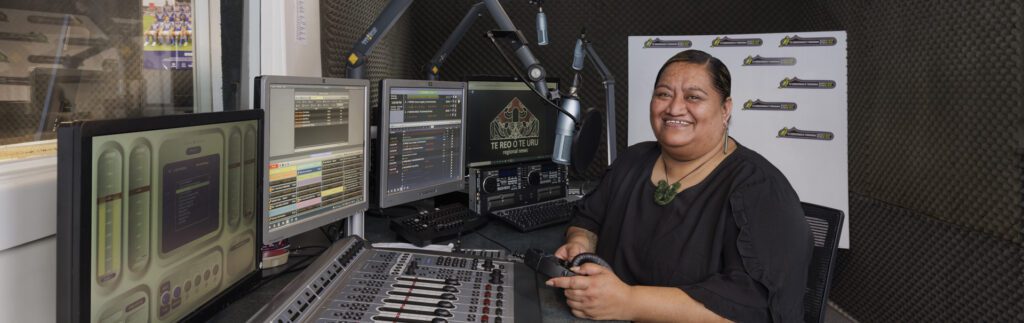
“Working in broadcasting and communications, honestly, is such a rewarding job. It’s also a huge responsibility. So, I would encourage any of our young people to get involved. As an educator also I feel very privileged and honoured to work with an amazing team at what we’re passionate about. And that’s the most important part of all, we are empowering people.” Tamzyn Pue
About this career
Broadcasting, Media and Communications are hugely rewarding careers, full of variety, opportunities and the privilege of listening to, learning about and sharing the many diverse stories, news and activities of people in our communities, nation and beyond.
If you are a passionate communicator who can think on your feet, or a deep-thinking writer, or a visual storyteller, the fields of communication and broadcasting might be for you.
The world of broadcasting and communication has been turned on its head by technology, the internet and digital innovation. Broadcasting today involves many pathways, skills and disciplines including radio broadcasting, writing, producing, directing, video and film making, multimedia and digital communications. Meanwhile Communication is a hugely diverse field to get into involving everything from journalism, digital design and content creation, through to marketing, strategic and internal communications and public relations.
Personal qualities you need
- Creativity, imagination, adaptability, energy and enthusiasm
- Excellent communication, listening and speaking skills
- Technical skills such as ability to write
- Curiosity, humour and a thirst for learning
- Great time management, organisation and people skills
- Confident and good at making quick decisions
Career Pathway
Radio Broadcasting and Media: It is possible to enter into radio broadcasting with passion, and a desire to learn, for example by starting out as a volunteer in community radio, without attending formal education. However, depending on what and where your dreams take you, for example a role in national media/ journalism may require qualifications.
You can study radio broadcasting and media in private training establishments and tertiary education providers at diploma and degree level. Such training includes video and digital storytelling, presenting, production, programming, marketing, sales, brand management, studio engineering, creative writing, journalism, and digital content management.
Communications and PR: It is possible to enter a career at entry level with hands-on, on-the-job learned skills, such as digital, social media and communication technology skills, but to progress to other types of roles such as corporate communications and public relations you need a proven track record, qualifications, advanced skills, and experience.
Communication can be studied at under-graduate and Masters level at universities and polytechnics including The Open Polytechnic / Te Pūkenga, Massey University and AUT.