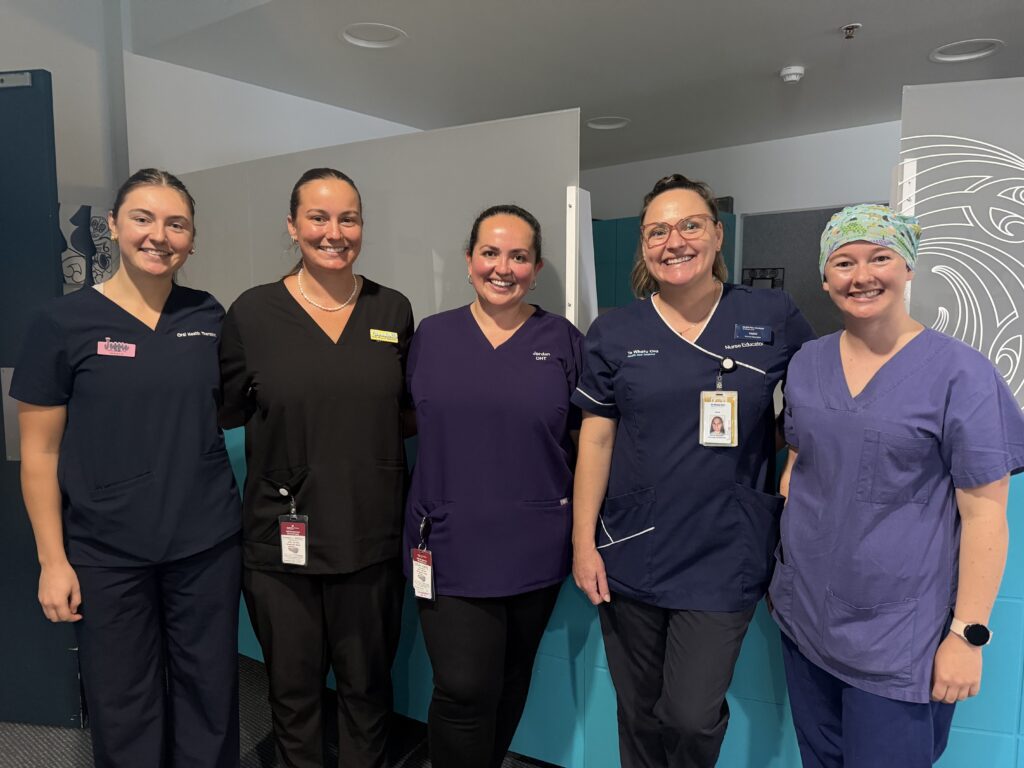
Our Whānau Career Story
Jordan Wearne, Oral Health Therapist
Where do I work and what do I do?
I work for Te Whatu Ora | Health New Zealand in the Taranaki Community Oral Health Service (COHS), where I work as an Oral Health Therapist.
Our service provides dental care for children and young people aged 0–17 years. This includes regular dental examinations, preventive treatments such as dental radiographs, fissure sealants and fluoride applications, as well as restorative treatment for teeth affected by decay. Depending on the clinical needs of the child, this may include fillings, stainless steel crowns and the extraction of primary teeth when necessary.
However, one of the most important aspects of my role is oral health education. We work alongside tamariki and their whānau to help them understand how to care for their teeth and maintain good oral health throughout their lives. For me, it is about much more than treating teeth; it is about building positive experiences, developing trust and empowering whānau with the knowledge and confidence to care for their smiles.
What was my career pathway to get where I am / and what led me to this?
When I finished high school, I was unsure about what I wanted to do. Rather than heading straight to university, I decided to stay in Taranaki, enter the workforce and gain some life experience.
I began my career as a Dental Assistant, initially working in private dental practices around New Plymouth before moving into the Community Oral Health Service.
It was while working alongside a group of incredibly passionate Dental and Oral Health Therapists that my interest in dentistry, and particularly children’s oral health, really developed.
I was inspired by the genuine care they showed their patients, the way they approached oral health education with warmth and without judgement, and their ability to make a dental appointment feel like a positive and even fun experience for a child. They demonstrated to me that oral health care could be about so much more than clinical treatment; it could be an opportunity to build confidence, establish trust and make a lasting difference for children and their whānau.
These same Dental and Oral Health Therapists were the reason I decided to apply for the Bachelor of Oral Health. Before I could be accepted into the programme, I needed to complete a Level 3 Biology course by correspondence. The team at COHS were incredibly supportive and encouraged me throughout the process, helping me take that next step towards a career I have now come to love.
Looking back, it was the people I worked alongside and the positive impact they had on their patients that ultimately shaped my career pathway. They inspired me to pursue oral health, and they continue to influence the kind of clinician I strive to be today.
“My why” for doing this job and making a difference for Māori
If I can make a dental appointment a positive, safe and meaningful experience for even one tamaiti and their whānau, then that is my why.
I believe health care, and oral health care in particular, should be about meeting people where they are at. It means providing the care they need, sharing knowledge in a way that is accessible and empowering, and supporting whānau to maintain good oral health in a safe, welcoming, culturally responsive and non-judgemental environment.
As a Māori woman, I find it disheartening that being Māori is recognised as a risk factor for poorer oral health outcomes. I do not want this to be something that tamariki and whānau simply accept as their reality. I feel a strong sense of responsibility to be part of changing that narrative, even if the difference I make is one child, one whānau or one positive dental experience at a time.
I want tamariki Māori to grow up knowing that good oral health is achievable, that they deserve access to quality care, and that they can feel safe, respected and understood when they walk through our doors.
There are many reasons I have chosen health care as my lifelong career, but at the heart of it is the opportunity to make a difference. I may not be able to change the bigger picture on my own, but I can influence the experiences of the children and whānau I meet every day. For me, that is where change begins.
“My why” for doing this job and making a difference for Māori
If I can make a dental appointment a positive, safe and meaningful experience for even one tamaiti and their whānau, then that is my why.
I believe health care, and oral health care in particular, should be about meeting people where they are at. It means providing the care they need, sharing knowledge in a way that is accessible and empowering, and supporting whānau to maintain good oral health in a safe, welcoming, culturally responsive and non-judgemental environment.